 The Prep Bible.
Rifle Storage Cases: How to Choose Hard, Soft and Long-Term Storage
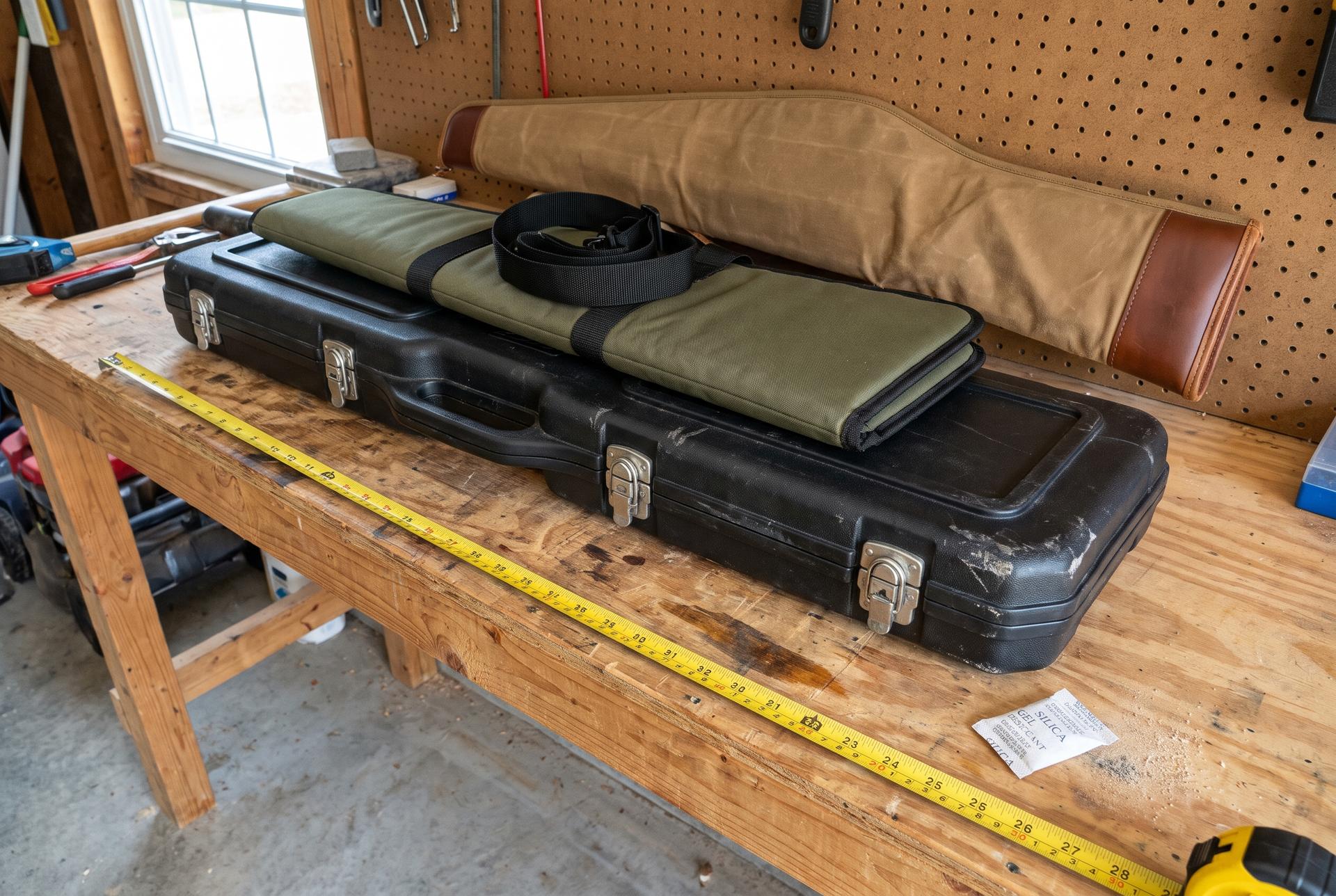
Pick a hard case if the rifle gets handled by other people, rides in a truck bed or flies. Pick a soft case if it mostly moves from a safe to a range bench by your own hands, and you want something light that stores flat. Everything else, size, lining, locks, is downstream of that one decision.
Sizing is the other place people get stuck. Case lengths are quoted as the case, not the rifle, and the usable interior is always shorter than the number on the label. A 48 inch case is the common answer for a scoped bolt gun, a 42 inch case suits most carbines, and the only way to be sure is to measure the rifle with the optic and sling mounted and add clearance.
This guide covers how to measure, what hard and soft shells each actually protect against, how scoped interiors differ, which materials hold up in a closet for years, and how to keep moisture off steel while the rifle sits. The store stocks hard shells, padded nylon and polyester bags and waxed canvas sleeves across a range of lengths, so the aim here is to get you to the right shelf rather than the right brand.
Hard Cases vs Soft Cases: What Each One Protects Against
A hard case is a moulded polymer shell with a foam or padded interior. It resists crushing, so it is what you want when the rifle is under other gear, in a truck bed, in a trailer, or out of your sight at a baggage counter. The shell also keeps shape in storage, so nothing presses on a scope turret or a bolt handle for months. The trade-off is bulk and weight, and a hard case takes up the same room empty as it does full.
A soft case is a padded fabric sleeve with a full-length zipper. It protects against scratches, dings, dust and light weather, and it is far easier to carry, stash behind a seat or hang in a closet. It does not stop a crush load. If someone sets a toolbox on a soft case, the rifle takes the hit. Most soft cases also roll or fold flat when empty, which matters if you own several.
The honest split: hard for transport you do not control, soft for transport you do. Plenty of people own both and keep the soft case for the drive to the range and the hard case for anything longer. If the rifle lives in a safe and only comes out on your own schedule, a soft case may be all you ever need.
There is a middle ground worth knowing about. Some hard cases are sealed with a gasket and rated for water and dust ingress, and the store carries a scoped rifle hard case rated IP67 as well as a waterproof handgun case built to a MIL-STD 810H test. Those matter if the case will sit in an open boat, a side-by-side or a wet camp. For a closet, you are paying for protection you will not use.
Measuring Your Rifle: Length, Scope Clearance and Case Sizing
Measure the rifle overall, muzzle to the rear of the buttpad, with the optic, muzzle device, bipod and sling mounted the way you store it. That is the number that has to fit. Then add a few inches of slack so the rifle is not wedged against the end of a zipper or a latch wall. A stock that fits with no room will chew on the lining every time you pull it out.
Case lengths are advertised as the case, not the usable cavity. A soft case labelled 48 inch generally swallows a rifle a little under that, because the padded ends and the zipper line eat space. Hard cases are worse in this respect, because the latch flange and the foam block sit inside the stated outside length. Manufacturers usually publish a maximum rifle length as well as a case length, and that is the figure to trust.
Do not forget the collapsible or folding stock. If you store a carbine with the stock collapsed, measure it collapsed, but check that it still fits with the stock extended, because you will not always remember to fold it. For a rifle with a folding stock, measuring folded can drop you a whole case size, which is why many short cases exist in the 34 to 38 inch range.
Width and depth matter on scoped rifles and on anything with a large magazine well, a bipod or an angled foregrip. A sleeve cut for a slim sporter will not zip over a wide-forend precision stock even if the length is right. If the case lists an internal width, compare it to the widest point of the rifle, usually the bolt handle or the bipod feet.
| Case length on the label | Typical rifle it suits | Notes |
|---|---|---|
| 34 to 38 in | Youth rifles, folded-stock carbines, short rimfires | Measure folded and extended before buying |
| 40 to 44 in | Most carbines, lever actions, standard rimfires | The common size for a non-scoped working rifle |
| 46 to 48 in | Scoped bolt actions and sporters | The default pick when a scope is mounted |
| 50 to 54 in | Long-barrelled rifles, scoped rifles with muzzle devices, doubles | Also where most double-rifle hard cases sit |
General sizing guidance only. Always compare your measured overall length against the maximum rifle length published by the case maker, not the case length on the label.
Scoped vs Non-Scoped Case Interiors
A scoped rifle case is not just a longer case. The interior is shaped to give height over the receiver so the turrets, the objective bell and the mounts are not pressed. In a hard case this shows up as a wedge or a stepped profile, deeper at the action end and shallower at the muzzle. In a soft case it shows up as extra width through the middle and a lining that is not stitched tight across the top.
Put a scoped rifle in a flat case sized for iron sights and two things happen. The lid pushes on the turret caps every time it latches, and the rifle sits at an angle so the stock takes the pressure. Neither will wreck the optic overnight, but zero shift and scuffed turret caps are the usual complaints.
Non-scoped interiors are flatter, slimmer and cheaper, and they are genuinely better for an iron-sighted lever gun, a shotgun or a rimfire. A slim case stores in less space and carries more comfortably. There is no reason to buy scope clearance you are not using.
If you swap optics on the same rifle, buy for the tallest setup you run. A case with a foam interior you can cut, or interlocking pluck foam, lets you shape the cavity once and leave it. Shaped foam also holds the rifle still, which does more for the optic than padding thickness does.
Materials and Build: Polymer Shells, Nylon, Polyester and Waxed Canvas
Hard shells are moulded polymer. Common versions include polypropylene, structural foam and high-impact plastic. Ribbing across the lid is not styling, it is what keeps a large flat panel from flexing onto the rifle. Check that the latches are reinforced where they meet the shell, because that is where a dropped case usually fails, not in the middle of the lid.
Soft cases are mostly nylon or polyester, quoted in denier. A higher denier number means a heavier yarn and a tougher face fabric, which is why 1000D nylon shells turn up on cases meant for hard use and 600D polyester on lighter ones. Some soft cases add a PVC backing or a PVC shell for water resistance. The lining matters as much as the shell: brushed tricot and fleece are soft enough not to scratch a blued barrel or an anodised receiver.
Waxed canvas is the traditional choice and it still earns its place. The wax sheds light rain and dusting snow, the fabric is quiet in the field, and leather trim at the ends takes the abrasion that kills cheap fabric cases. It is not waterproof, and it should not be used as a long-term airtight wrap, but as a field sleeve for a lever action or a sporter it is hard to fault. Rewax it when water stops beading.
Zippers and stitching are the real tell on any soft case. Oversized metal zippers with a real pull, bar tacks at the handle roots, and a full-length opening that lets you lift the rifle straight out rather than thread it through a slot. A zipper that bottoms out six inches short of the muzzle is how scopes get knocked.
Padding, Linings and Rust Prevention for Long-Term Storage
Padding thickness is quoted as total padding across both faces, so a case listing a couple of inches of total padding is giving you about half that under the rifle. Closed-cell foam is the better choice for anything that might get wet, because it does not soak up and hold water the way open-cell foam does. In a hard case, high-density or interlocking foam that grips the rifle beats loose padding every time.
Linings are the part people underestimate. Fleece and fur linings feel protective, and they are kind to a finish, but they also hold moisture against steel in a damp room. If the case lives in a basement, a garage or a shed, that is a rust problem waiting to happen. A sealed hard case with a gasket is worse again if you close damp air inside it.
The rule for long-term storage is simple: store the rifle clean, lightly oiled and dry, and control the air around the case rather than relying on the case to seal it. Wipe the steel down with a light protective oil, let the solvent flash off, and only then close the lid. Our guide on cleaning kits covers the products and the order of operations.
Desiccant helps, but only if you maintain it. Silica gel packs and rechargeable desiccant canisters absorb moisture until they are saturated, then they do nothing. Put a reminder on the calendar to check and recharge them. For a safe or a closet, a dehumidifier rod or a desiccant canister in the space does more good than anything inside the case.
Locks, Latches, Straps and Transport Features
Look for padlock points rather than built-in locks. Most hard cases have holes through the latch flange sized for a padlock shackle, and better soft cases put a matching pair of grommets on the zipper pulls. That lets you choose the lock, and it lets you match whatever a given situation or carrier requires. Built-in combination locks on cheap cases are usually the first thing to break.
A lockable case is not a safe. It deters casual hands and it keeps a curious child out, but a determined person with a tool defeats any case. Treat it as one layer. Long-term security still belongs in a safe or a locked cabinet.
On soft cases, check the carry hardware. A removable padded shoulder strap with swivel clips beats a fixed strap, because you can take it off when the case is in a vehicle. Twin grab handles with a wrap-around strap under the case carry a heavy rifle better than handles sewn to the face fabric alone. Exterior accessory pockets for magazines and a cleaning kit save you carrying a second bag, and double cases with a padded internal divider stop two rifles rubbing.
If you fly, this is the area to be careful. The federal rule comes from the TSA, which requires firearms in checked baggage to be unloaded and in a locked, hard-sided container, with the key or combination held by the passenger (see the TSA page on transporting firearms and ammunition: https://www.tsa.gov/travel/transporting-firearms-and-ammunition). Airlines add their own requirements on top of that, so contact the airline before you book and confirm what they ask for. For carrying a rifle in a vehicle, check your state attorney general or state police firearms page for the law where you live and anywhere you will drive through.
Matching a Case to the Way You Actually Store and Move
Closet or safe, rifle rarely moves. A padded soft case or a waxed canvas sleeve is plenty. It keeps dust off, stops safe rash, and takes up almost no room. Keep the air dry and check the rifle a few times a year.
Truck, side-by-side or farm use. Hard case, or a heavy soft case with a PVC or 1000D shell if weight matters more than crush protection. Things get stacked on gear in a truck bed, and the hard shell is the only thing that reliably says no.
Range days. A soft tactical case with accessory pockets does the most work here, especially a double case if you bring two rifles. Being able to carry the rifle, magazines, targets and a cleaning kit in one trip from the car is worth more than the last ten percent of impact protection.
Travel, boats, wet country or anything checked. A sealed hard case with a gasket, pluck foam and padlock points. Pay attention to the ingress rating if the case will see standing water, and remember that a sealed case traps whatever humidity was in the air when you shut it.
Case Care and Storage Habits That Keep Rifles Clean
Dry the case, not just the rifle. If you come home in the rain, open the case, take the rifle out, and leave the case open somewhere warm until the lining is dry. A closed damp case is the most common cause of surface rust on a rifle that was put away clean.
Vacuum the interior now and then. Grit that works into foam or fleece becomes sandpaper against a finish. On waxed canvas, brush the outside, spot-clean with cold water only, and rewax when the fabric stops shedding water. Do not machine wash a waxed case or put it near direct heat.
Rotate what you keep in the accessory pockets. Cleaning patches and bore solvent left in a pocket for a year can leak, and a magazine left loaded in a pocket is a magazine you have not inspected. Empty the pockets when you put the case away.
Check hardware twice a year. Latches on a hard case can crack, zipper sliders wear and stop closing fully, and strap stitching pulls. All three are cheap to catch early and annoying to discover with a rifle already in the case.
Hard shell rifle cases
Moulded polymer cases with foam interiors, for transport you do not control.
Soft and tactical rifle cases
Padded nylon and polyester bags, single and double, with accessory pockets and straps.
Waxed canvas and classic sleeves
Traditional canvas cases with leather trim for field carry and closet storage.
Common questions
- What size rifle case do I need for a scoped rifle?
- Measure the rifle muzzle to buttpad with the optic, muzzle device and sling fitted, then add a few inches of slack. For most scoped bolt actions that lands you in a 46 to 48 inch case. Compare your measurement with the maximum rifle length the case maker publishes, not the case length printed on the label, because the usable cavity is always shorter.
- Is a hard rifle case better than a soft one?
- Better at different jobs. A hard shell resists crushing and impact, so it suits truck beds, trailers, checked travel and any trip where other people handle the case. A soft case is lighter, cheaper, easier to carry and stores flat, which suits safe-to-range trips you control. Many people keep one of each rather than compromising on one case.
- Will a 48 inch case fit a 48 inch rifle?
- Probably not. The 48 inch figure describes the outside of the case. Padded ends, the zipper line or, on a hard case, the latch flange and foam block all take up interior space. Work from the maximum rifle length the manufacturer publishes, and if that is not given, assume the usable interior is meaningfully shorter than the label.
- Can I store a rifle in a case long term?
- Yes, if you store it clean, lightly oiled and dry, and control the humidity in the room rather than trusting the case to seal it out. Fleece and fur linings hold moisture against steel, and a gasket-sealed case traps whatever damp air you closed inside. Use desiccant and recharge it on a schedule, and inspect the rifle a few times a year.
- Do rifle cases need to be locked?
- For checked baggage, the TSA requires the firearm to be unloaded and in a locked, hard-sided container, with the key or combination kept by the passenger (https://www.tsa.gov/travel/transporting-firearms-and-ammunition). For everything else, check your state attorney general or state police firearms page, and the airline if you are flying. Practically, look for padlock points on the latch flange or matching grommets on the zipper pulls so you can fit your own lock. A locked case deters casual access but is not a substitute for a safe.
- What is a scoped rifle case and do I need one?
- A scoped case has extra interior height over the receiver, usually a wedge or stepped profile on a hard case, so the turrets and objective bell are not pressed when the lid closes. You need one if an optic is mounted. For an iron-sighted lever gun, shotgun or rimfire, a slimmer non-scoped case is lighter, cheaper and stores in less space.
Sources
- Evolution Outdoor Liberator Scoped Rifle Hard Case SRC-3554 product listing, The Prep Bible catalog
- SKB iSeries 2-Gun Handgun Case 3I-1510-9B-2G product listing, The Prep Bible catalog
- Denier is a textile yarn mass unit; Bulldog Extreme Tactical (1000D nylon) and US PeaceKeeper P30024 (600D polyester) product listings, The Prep Bible catalog
- Bulldog Cases product listings stating total soft padding figures, The Prep Bible catalog
- TSA firearms and ammunition transport requirements for checked baggage
- TSA, Transporting Firearms and Ammunition