 The Prep Bible.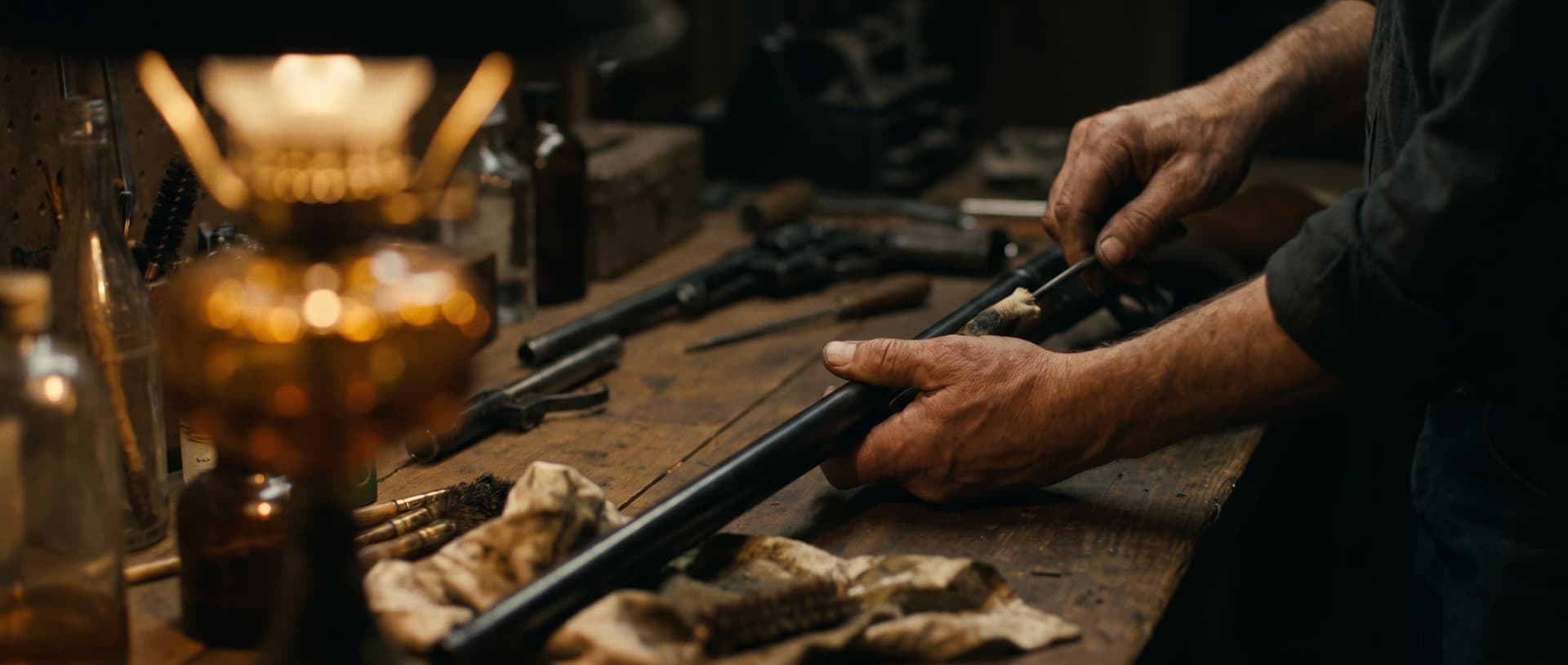
Solvent choice depends mostly on what you're cleaning off. Copper solvents target jacket fouling in the bore, powder solvents cut carbon buildup around the action and chamber, and all-purpose CLPs (clean-lubricate-protect) handle routine maintenance in one step but won't out-perform a dedicated copper solvent on a heavily fouled barrel. Bore snakes are fast and mess-free for routine field cleaning, while a proper cleaning rod with jag and patches gives a more thorough clean and is worth using periodically even if you carry a snake for quick jobs between range trips.
How often you clean depends more on what you're shooting than a fixed schedule - corrosive ammo, suppressed fire, and high round counts all call for more frequent attention than a lightly used range gun. Over-lubrication causes as many problems as under-lubrication, attracting dirt and carbon into moving parts; a thin, even coat at contact points beats a heavy application everywhere. Basic gunsmithing tools - bit sets sized for your specific screws, not generic hardware-store bits - prevent stripped screws and buggered finishes on stocks and optics mounts.
Common questions
How often should I clean my gun?
It depends on use - a gun fired occasionally at the range can go several sessions between full cleanings, while one used with corrosive ammo, suppressed, or fired heavily should be cleaned sooner. At minimum, clean after exposure to rain, mud, or storage in humid conditions, and always before long-term storage.
What's the difference between a solvent and a CLP?
A dedicated solvent (copper or powder-specific) is formulated to break down one type of fouling and is typically stronger for heavy cleaning jobs. A CLP (clean, lubricate, protect) combines mild cleaning, lubrication, and a protective coating in one product - convenient for routine maintenance but usually less effective than a dedicated solvent on heavy fouling.
Can I use too much gun oil?
Yes. Excess oil attracts dust, carbon, and debris into the action, which can gum up moving parts over time, especially in dusty or sandy environments. A thin, even film at contact points - rails, pins, the bolt - is usually enough; wipe off visible excess rather than leaving pooled oil in the mechanism.
Do I need special tools to clean and maintain a gun?
A basic kit - bore brush, rod or snake, patches, solvent, and oil - covers routine cleaning for most firearms. Detail stripping beyond what the owner's manual describes, or work on triggers and internals, generally calls for gunsmith-specific bits and punches sized to your exact model to avoid stripped screws or marred parts.