 The Prep Bible.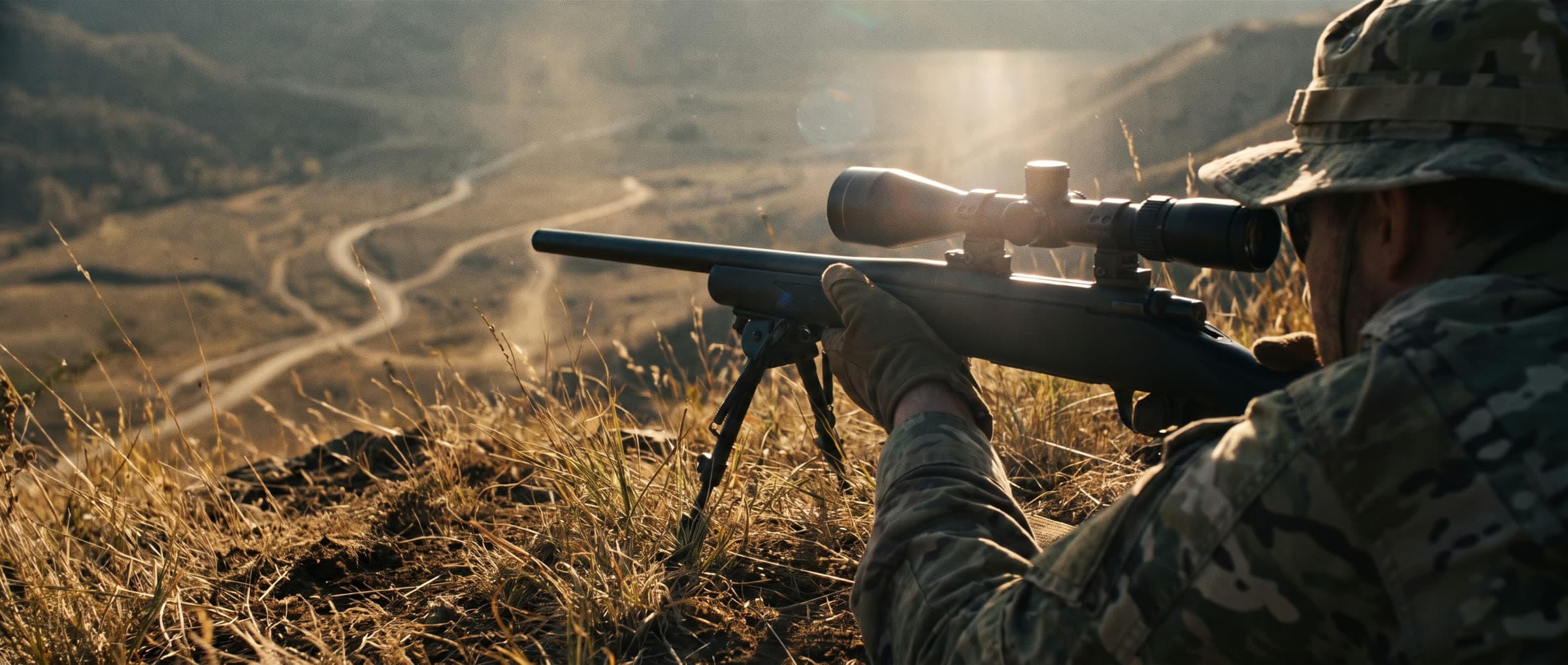
Magnification and objective lens size trade off against each other more than most buyers expect. A bigger objective (40mm, 50mm) pulls in more light for dawn and dusk hunting, but it sits higher off the bore, forces a taller mount, and adds weight up front. Higher magnification narrows your field of view and eye box, which matters if you're tracking moving game or shooting fast at close range. For most rifles used inside 200 yards, a modest 3-9x or 1-6x scope covers more real situations than a 20x target scope ever will.
Red dots and reflex sights are built for speed - both eyes open, fast target acquisition, minimal parallax at close range. Scopes are built for precision at distance, with reticles that let you hold for wind and drop. Mount compatibility trips up more first-time buyers than optic quality does: check your rail type (Picatinny vs Weaver), ring height against your objective diameter, and whether a red dot needs an absolute co-witness height to line up with factory sights. Stock ships same or next business day from U.S. warehouses, so mismatched rings are a quick fix, not a lost week.
Common questions
What's the difference between a red dot and a reflex sight?
The terms get used loosely, but a reflex sight typically uses a larger, more exposed lens and reflects the dot off angled glass, while a red dot (often tube-style) uses a smaller emitter and window. Functionally, both put an illuminated dot on target with both eyes open at close-to-medium range and no magnification.
How much magnification do I actually need?
For most hunting and defensive rifle use inside 200 yards, 3-9x covers it. Long-range precision shooting past 400 yards benefits from 10-20x+ with a fine reticle. More magnification isn't automatically better - it narrows field of view, shrinks eye relief, and makes off-hand shooting harder. Match the glass to the range you actually shoot, not the range you might someday.
Will a scope fit any rifle?
No - fit depends on your rail or base type (Picatinny, Weaver, dovetail), ring height relative to your barrel and objective lens size, and eye relief for your stock length. Check your rifle's mounting system before buying rings or a base, and confirm the scope's objective diameter clears the barrel with the rings you're using.
Do I need to zero a red dot the same way as a scope?
Yes. Both need to be zeroed at a known distance before you rely on them - bore-sighting gets you on paper, but only live-fire zeroing at your intended range confirms point of impact. Red dots typically hold zero well once mounted solidly; recheck after any drop or hard mount change.