 The Prep Bible.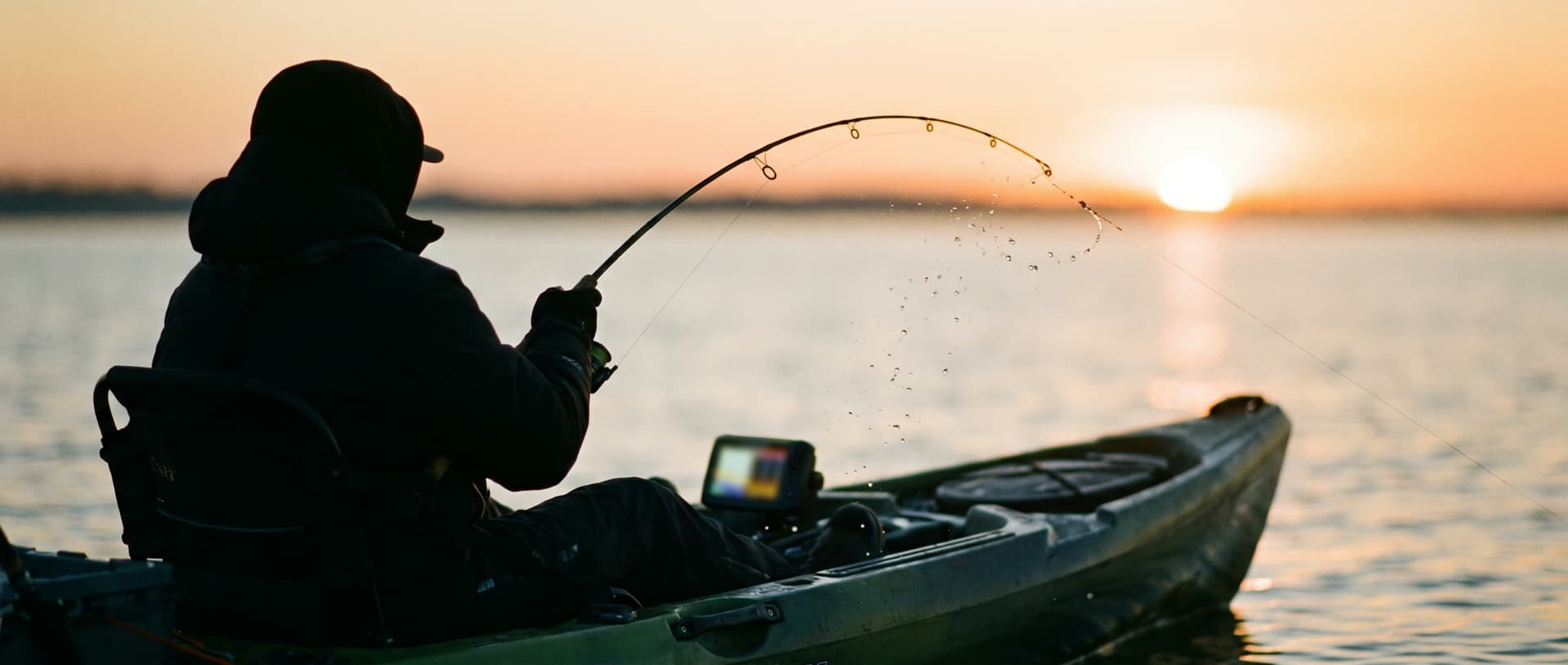
Transducer choice depends on your hull and how deep you're fishing. Transom-mount transducers are the simplest to install and work well on most boats up to moderate speeds; through-hull units give cleaner readings at higher speeds but require drilling into the hull. Frequency matters too - lower frequencies (50kHz) penetrate deeper water with a wider cone, good for offshore and deep lake work, while higher frequencies (200kHz+) give sharper detail in shallower water. CHIRP transducers sweep a range of frequencies for better target separation and are worth the upgrade if your electronics support it.
Rod holder mounting depends on your platform: flush-mount holders sit cleanest on a boat gunwale but require permanent drilling, while clamp-on and track-mount systems are removable and better suited to kayaks or rented boats. Kayak rigging is its own category - anchor trolleys, paddle leashes, and rod leashes prevent gear loss on moving water, and a PFD is worth choosing for paddling mobility, not just flotation rating. Stock ships same or next business day from U.S. warehouses, so building out a rig piece by piece doesn't mean long waits between orders.
Common questions
What's the difference between a transom-mount and through-hull transducer?
A transom-mount transducer attaches to the back of the boat above the waterline - easy to install without drilling into the hull, but readings can degrade at higher speeds due to turbulence. A through-hull transducer mounts through the hull itself for cleaner readings at speed, but installation is more involved and boat-specific.
Do I need a life jacket on a kayak?
Requirements vary by state and by waterway, but many states require a wearable PFD to be on board at minimum, with some requiring it worn at all times on certain waters or by certain age groups. Check your state's boating regulations, since rules for kayaks and paddlecraft often differ from those for motorized boats.
What frequency fishfinder do I need?
Lower frequencies (50kHz) cover deeper water with a wider cone but less fine detail - good for deep lakes and offshore. Higher frequencies (200kHz) give sharper target detail in shallower water. CHIRP units sweep a frequency range for better separation between fish and structure, and are the better all-around choice if your budget allows it.
How do I mount a rod holder on a kayak without drilling?
Track-mount and clamp-on rod holder systems attach to existing kayak accessory tracks or the hull's gunwale without permanent modification, and can be repositioned or removed easily. Flush-mount holders require drilling and are more common on boats where the mount stays permanent - most kayak anglers prefer the removable, adjustable route.